
Glass Fiber Pasting Paper
Glass fiber pasting paper applied to battery plates to support wet lead paste during manufacturing.
Scroll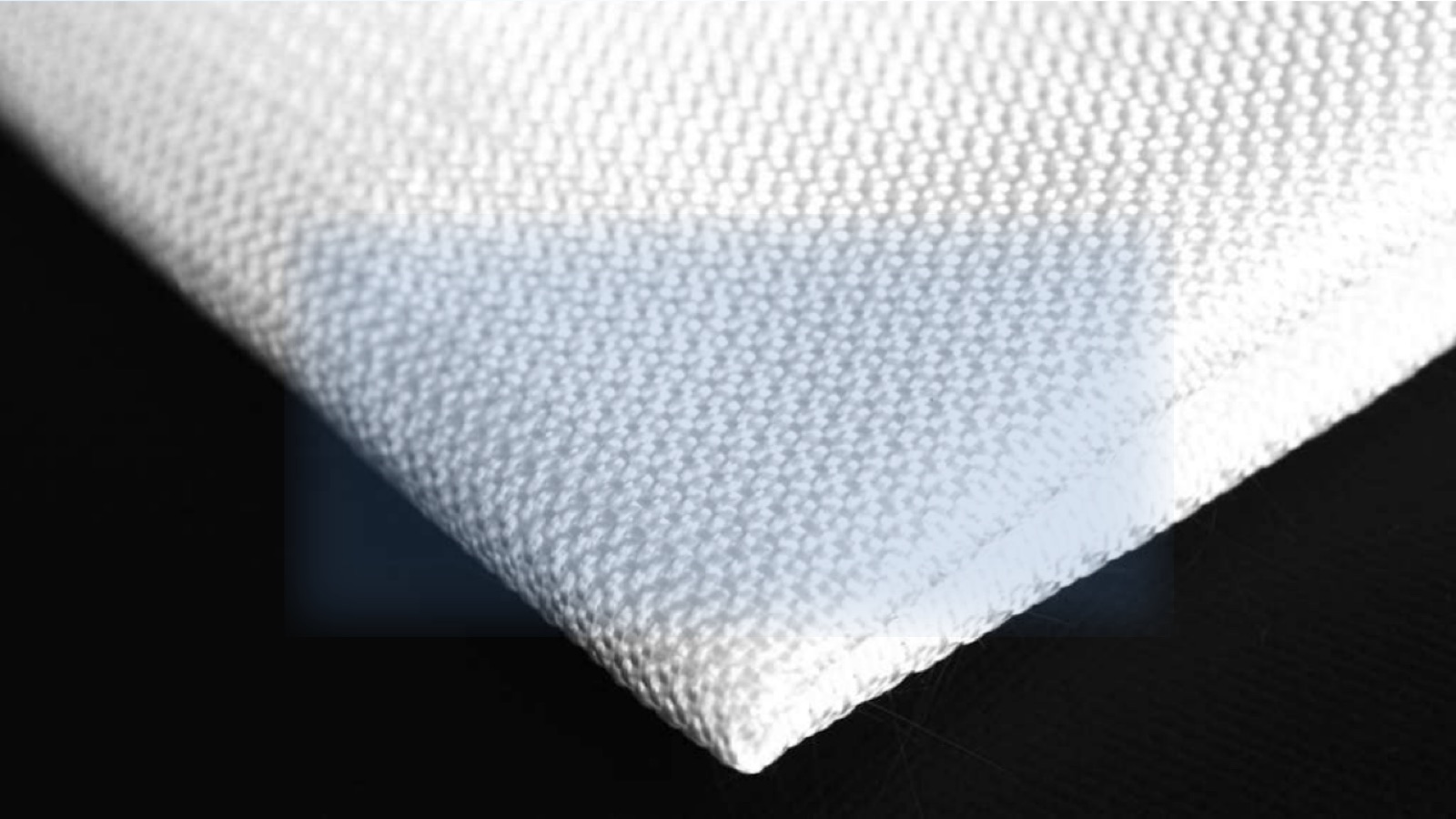
Glass fiber pasting paper
Illustrative 3D rendering; not to scale. Specifications are drawn from the printed catalogue and company technical materials.
01 · THICKNESS
0.10–0.35 mm @20 kPa
02 · FIBER MATRIX
BET target ≥2.0 m²/g
03 · ON THE PLATE
160 g/m²·mm
Specifications and performance data
Catalogue specifications and design targets are shown together. The chart displays approximate compression and recovery values at 10 and 100 kPa only. Contact us to discuss customer-specific tolerances.
Only approximate 10 and 100 kPa endpoint values read from the printed catalogue are shown. Straight connectors are visual guides, not measured intermediate-pressure data.
Third-party SEM, ICP and BET reports are available on request. Products are RoHS & REACH compliant.
Download preliminary TDS (PDF)Functions in plate manufacturing
Pasting paper is a thin, uniform and chemically stable glass fiber sheet applied to the plate surface during pasting. Its BET specific-surface-area design target is ≥2.0 m²/g; a fine 0.5–1.5 μm fiber blend helps retain lead paste through curing and assembly.
It is designed for modern lead-acid plate manufacturing, particularly continuous grid-pasting lines and applications with demanding reliability and durability requirements.
Supports active-material adhesion
Provides a uniform, porous surface that helps lead paste adhere to the grid and reduces active-material shedding during cycling.
Supports electrolyte penetration
Capillary action helps electrolyte penetrate the paste layer and supports ion exchange between the lead paste and sulfuric acid.
Plate-surface reinforcement
Acts as a reinforcing layer that helps the plate resist warping and cracking during charge-discharge cycling, including high-temperature and deep-discharge service.
Consistent grid-to-paste contact
In continuous grid-pasting lines, the paper helps maintain consistent contact between the grid and pasted active material, reducing interfacial resistance and supporting uniform current distribution.
Automotive Start-Stop
Dual fiber-diameter separator for start-stop AGM batteries.
SLI
SLI separator for automotive cranking duty — 155 g/m²·mm.
Telecom & UPS
Float-service separator for telecom, UPS and standby batteries.
Evaluating a glass fiber pasting-paper supplier?
Send us your technical specification to confirm sample specifications and shipping arrangements for Glass Fiber Pasting Paper.