
Automotive Start-Stop AGM Separator
Dual fiber-diameter AGM separator for start-stop batteries under high vibration and deep cycling.
Scroll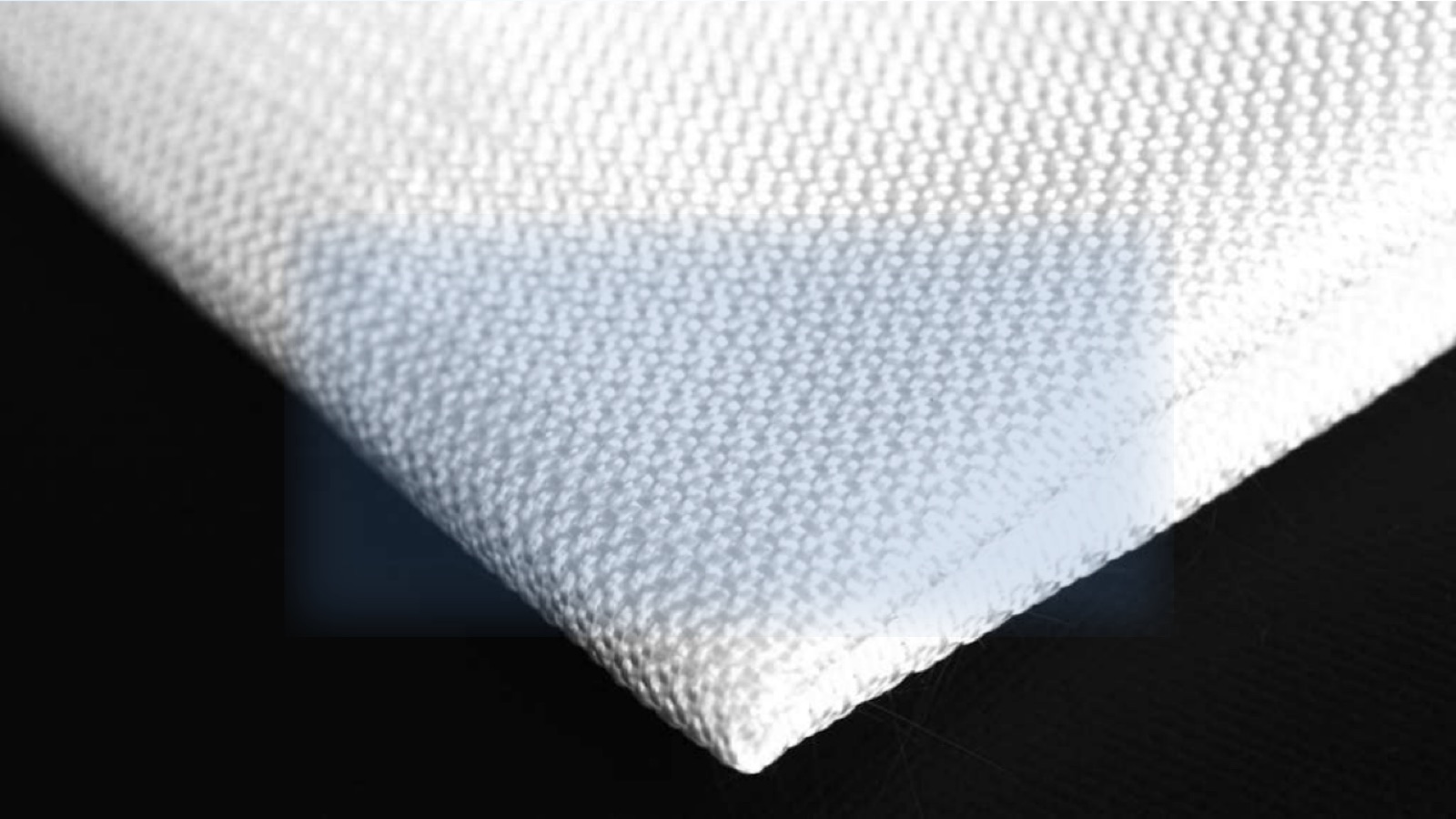
AGM separator
Illustrative 3D rendering; not to scale. Specifications are drawn from the printed catalogue and company technical materials.
01 · THICKNESS
0.8–2.5 mm @10 kPa
02 · FIBER MATRIX
dual Ø 1.0–3.0 + 5.0–10.0 μm
03 · IN THE CELL
160 g/m²·mm
Specifications and performance data
Catalogue specifications and design targets are shown together. The chart displays approximate compression and recovery values at 10 and 100 kPa only. Contact us to discuss customer-specific tolerances.
Only approximate 10 and 100 kPa endpoint values read from the printed catalogue are shown. Straight connectors are visual guides, not measured intermediate-pressure data.
Third-party SEM, ICP and BET reports are available on request. Products are RoHS & REACH compliant.
Download preliminary TDS (PDF)Dual fiber-diameter construction
Two fiber diameters for production-line strength and vibration resistance
Compared with conventional AGM (baseline = 100)
Our start-stop series uses a dual fiber-diameter construction: a fine glass microfiber matrix provides electrolyte retention and surface area, while a coarser fiber fraction adds mechanical strength. The resulting separator withstands high-speed automated enveloping and helps maintain plate-group compression throughout the battery’s cycle life.
Compared with conventional AGM constructions, the series has over 200% higher tenacity, over 100% higher puncture resistance and 103% higher wet tensile strength, reducing the risk of dendrite short circuits and assembly damage. A non-wetting fraction of around 10% helps preserve oxygen-recombination pathways under saturation.
Key requirements for start-stop duty
Frequent restarts
Repeated start-stop operation demands frequent high-current cranking. Stable float performance and reliable high-current discharge help maintain restart voltage over repeated cycles.
PSoC cycling
Partial state-of-charge operation promotes electrolyte stratification and dendrite growth. High porosity helps retain acid, while puncture resistance increased by over 100% helps reduce short-circuit risk.
Constant vibration
Engine-compartment vibration loads every interface in the cell. Wet tensile strength increased by 103% and tenacity by over 200% help maintain plate-group compression throughout service life.
SLI
Single fiber blend for starting, lighting and ignition duty, with the same thickness and density range.
Motive Power
For traction batteries requiring deep-cycle durability and BET ≥1.6 m²/g.
Pasting Paper
For continuous grid-pasting lines: glass fiber pasting paper with a BET design target of ≥2.0 m²/g.
Evaluating a second source?
Send us your technical specification to confirm sample specifications and shipping arrangements for Automotive Start-Stop AGM Separator.